
Journal · Planning
The weekly review — twenty quiet minutes that change the next week
A short weekly review helps you close the week, clear your head and plan the next one with less stress. Five steps, twenty minutes, once a week.
October 29, 2026 · 3 min read
 Save
A plan written on Monday usually looks very different by Thursday. Tasks move, new ones appear, a few quietly disappear. The weekly review is the moment when you put it all back in order.
David Allen made the term popular in Getting Things Done, where he calls it the habit that keeps the whole system working. You do not need his full method to benefit from it. Twenty minutes and five steps are enough.
When to do it
Pick one fixed time: Friday afternoon, Sunday evening or Monday morning before you open your email. The best time is the one you will keep. Put it in your calendar as a meeting with yourself.
Step 1. Empty your head (5 minutes)
Write down everything that is on your mind: unfinished tasks, ideas, worries, things you promised someone. Do not sort yet. The goal is to stop carrying the list in your head.
Step 2. Look back (5 minutes)
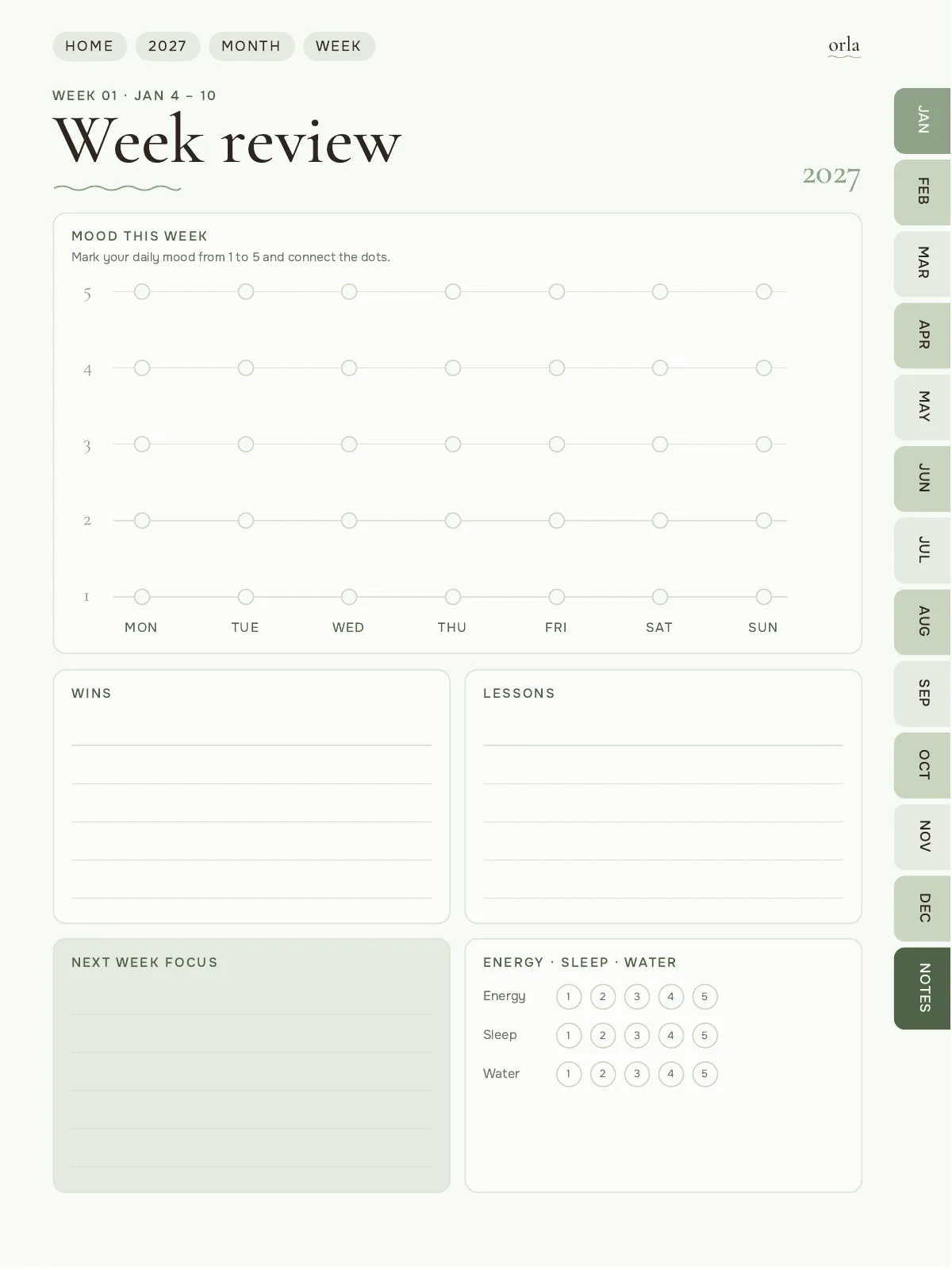
Open last week’s pages and answer three questions:
- Wins — what went well, even small things.
- Lessons — what did not work and why.
- Energy — how did you sleep, how did you feel, what drained you.
Wins matter more than they seem. Without them, the review turns into a list of everything you did not finish.
Step 3. Close loops (3 minutes)
Go through the unfinished tasks. For each one, choose:
- move it to next week,
- schedule it for a specific date,
- delegate it, or
- drop it.
Dropping is allowed. A task that has moved three weeks in a row is usually not a task but a wish.
Step 4. Look ahead (4 minutes)
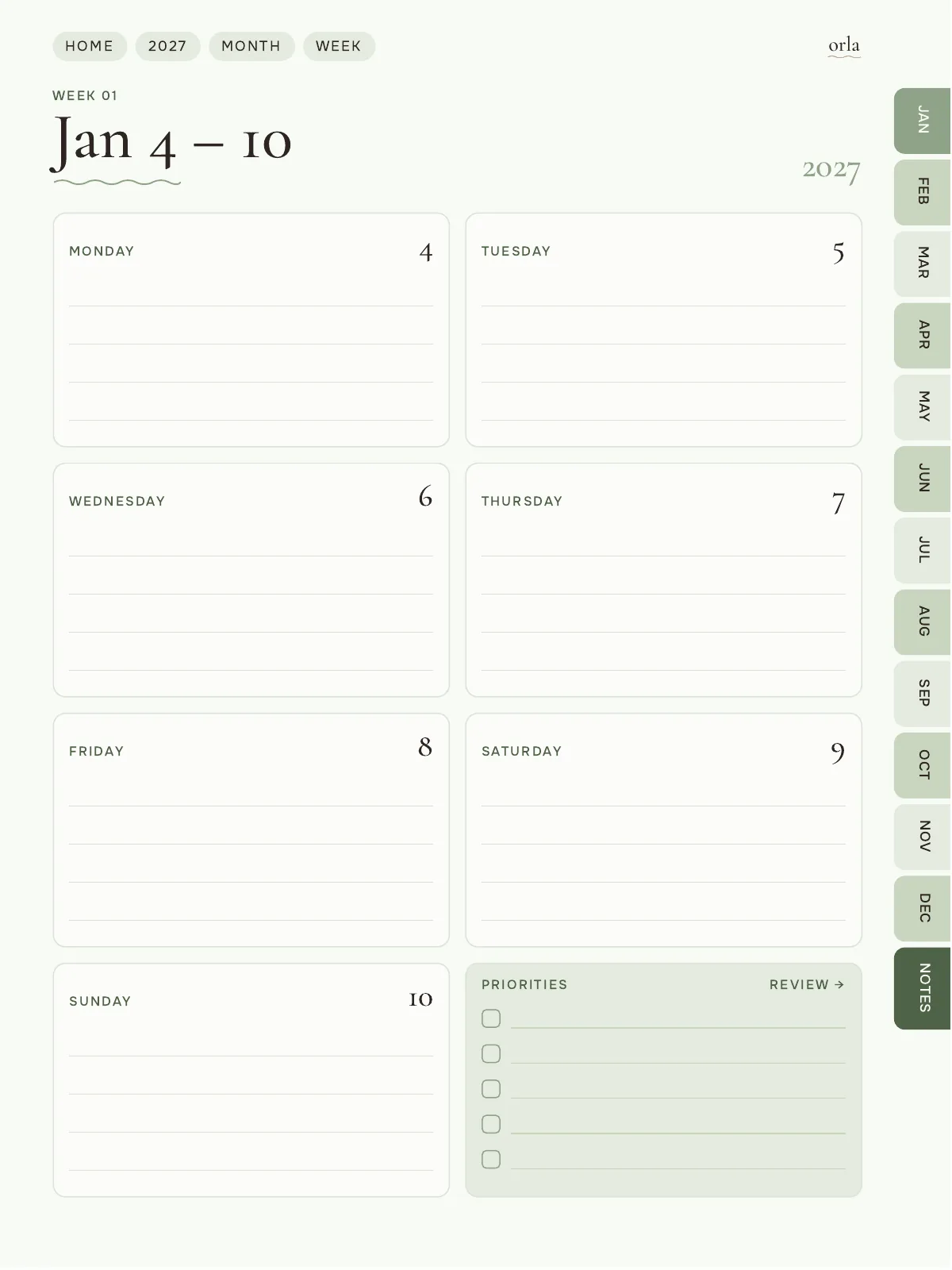
Check the calendar for the next two weeks: appointments, deadlines, birthdays, trips. Many stressful weeks are simply weeks where something was in the calendar and nobody looked.
Step 5. Choose a focus (3 minutes)
Pick one main focus for the next week and no more than three priorities. Everything else is welcome, but these come first.
Keep it light
The weekly review is not an exam. If you miss a week, do a short version next time: wins, one lesson, one focus. Even five minutes keep the habit alive.
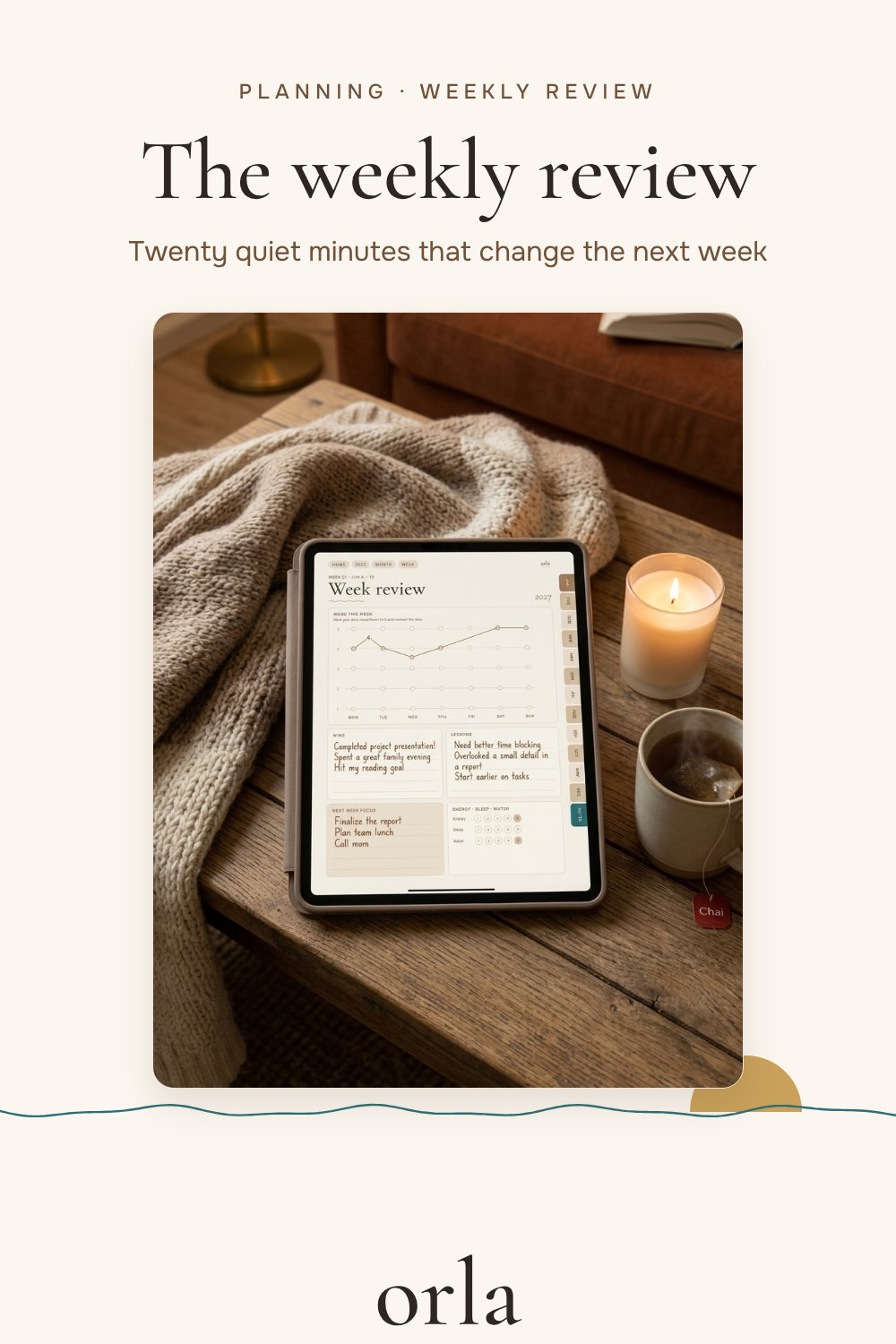
In the Orla planner
Every week in the Orla 2027 planner ends with a Week review page: mood for each day, wins, lessons, energy, sleep and water, and a box for next week’s focus. The month and quarter reviews follow the same pattern, so small notes add up to a clear picture of the year.